The court case of Friedrichs v. California Teachers Association is another attack on U.S. public sector union workers. Today, in many such unions, workers who refuse to join the union still must pay their “fair share” for the benefits both members and non-members enjoy. Under the guise of “free speech,” this case would end that practice. A non-union worker would pay no fee but still receive the same benefits as paying union members, significantly limiting the power of workers to fight back collectively. This idea of “fair share” has been upheld many times since the 1977 Abood Supreme Court case.
Since the death of Supreme Court Justice Antonio Scalia, the fate of Friedrichs is very much up in the air, but the attack on the working class is very much alive. And since public sector workers are largely Black and women, this is a racist and sexist attack, once again dividing and weakening the entire working class (see box).
In the past, when led by communists, unions won some significant victories. The include Social Security, unemployment benefits, the 5-day 40-hour work-week, better wages, and other gains, made with militant, often illegal. Workers broke the bosses’ laws. They fought pitched violent battles against hired gun thugs, police and army troops. In the U.S., they included general strikes in numerous cities and mass community support for anti-racist walkouts like the 1968 Memphis sanitation workers’ strike.
In the 1930’s, during the Great Depression, the rulers feared workers’ anger might lead to communist revolution as occurred in Russia. Their fears were fueled by the bonus march of World War I veterans, hunger marches and the 44-day sit-down strike against General Motors workers in Flint, Michigan. To appease and pacify the working class the rulers passed the New Deal reforms and were forced to allow some unionization. But eventually they installed a reformist, anti communist union leadership which kept their demands modest and did not challenge capitalism.
Today U.S. rulers are being increasingly challenged, both economically and politically, by imperialist rivals such as China and Russia. They need more funds for their present and future wars, meaning less and less for the working class. The union movement is a shell of its former self, allowing the ruling class to cut back or eliminate many past reforms such as welfare, housing, pensions, education, mass transit budgets, and benefits. The Friedrichs Supreme Court case is one more attempt to lower the living standards of all U.S. workers.
Reforms never last. The answer to Friedrichs and other attacks is to rebuild a revolutionary, fighting communist-led working-class movement. In the past, when communists tried to build such a movement, unfortunately they made winning reforms primary. The gains have been slowly taken away. The movement that we in the Progressive Labor Party are building must make revolution primary. Let’s get rid of capitalism once and for all.
What Can and Should We Do?
Today the working class has been divided and weakened, so the bosses attack and attack and attack. Racism, nationalism, sexism, and individualism harm our collective ability to fight back. We must spread the communist ideas of militant struggle wherever we are. Organizing on the job must address class solidarity, anti-racism, anti-sexism and call to smash capitalist exploitation. We need to build student-parent-teacher alliances in the schools, hospital worker-patient alliances and worker-client alliances wherever we can. We need to organize workers to fight racism much as was done during the teachers’ strike against the Chicago school system. PL’ers must involve themselves in the struggles large and small at their workplaces and in their communities. We can’t stand by idly while the bosses attack. However, our goal goes much farther than each individual struggle. We aim to eliminate the bosses’ attacks by building for, and winning, a communist revolution!
- Information
Trump, Clinton, Sanders: U.S. Imperialism’s Many Masks
- Information
- 10 March 2016 594 hits
For the U.S. capitalist rulers, this year’s electoral circus has one primary goal: to win back disillusioned workers and keep them loyal to the profit system and the embattled U.S. empire. After decades of vicious racist attacks to divide and weaken the working class, the bosses have upped the ante by using the current presidential campaign to attack immigrants, refugees, and Muslim workers. But the capitalists are also desperate to keep young Black and Latin voters in the patriotic fold, since they’ll need them to fight the next big inter-imperialist war. These contradictory goals explain the polarizing competition between candidates like Donald Trump, Hillary Clinton and Bernie Sanders.
The revolutionary communist Progressive Labor Party fights to organize all workers—Black and Latin and white, immigrant and Muslim—as an international class. While capitalists in every country build nationalism to justify their wholesale theft and mass murder, PLP fights for the international working class to smash the bosses and the phony elections that mask their bloody capitalist dictatorship.
We say: Don’t vote, organize—for workers’ power and communist revolution!
How the Bosses Use Trump
Front-running Republican Donald Trump’s candidacy is openly sexist, racist and uber-imperialist. He is the favored candidate of Nazis and Ku Klux Klan sympathizers the world over, from Louisiana’s David Duke to France’s Jean-Marie Le Pen and the Netherland’s Geert Wilders. While Trump also has succeeded in rallying some disaffected white workers, hundreds of millions of others are disgusted and repulsed by his campaign.
The finance capital bosses whom Trump represents—ExxonMobil, Citigroup, JPMorgan Chase—are using their media to manipulate this healthy hatred. They are doing all they can to lead workers into the arms of the bosses’ liberal mouthpieces, Democrats Hillary Clinton and Bernie Sanders—in absolute opposition to our class interests. These so-called “lesser evils” are more dangerous to the working class than Trump. They foster the deadly illusion that the capitalist state can be reformed to meet workers’ needs.
The Clintons: Liberal Racist Terror
The collapse of the old communist movement is the biggest disaster in the history of our class. In World War II, communists worldwide, led by the socialist Soviet Union, smashed Nazi Germany, at the time the ultimate expression of capitalist racism and imperialism. But socialism failed to eliminate dangerous vestiges of capitalism, like the wage system and nationalism. This political weakness gradually eroded workers’ power in the Soviet Union and China. By the early 1970s, with the defeat of the Great Proletarian Cultural Revolution in China, the old communist movement’s retreat from revolution was complete. This huge defeat gave world capitalism a new lease on life—and a blank check to commit genocide around the globe, from Southeast Asia to the Middle East. The Soviet Union was formally dissolved in December 1991, one month after the election of Hillary’s husband, Bill Clinton, as U.S. president.
As new-generation liberal bosses with high popularity among workers, especially Black workers, the Clintons and their allies fronted for the capitalist bosses’ war on the entire working class. They used welfare reform to victimize Black women and children, intensifying poverty for millions of families. They passed the Violent Crime Control and Law Enforcement Act of 1994, paving the way for mass incarceration and U.S. prison/jail population that now totals 2.2 million, of whom two-thirds are Black or Latin. (Hillary Clinton justified this atrocity by portraying Black youth as “super-predators” with “no conscience, no empathy….we have to bring them to heel.”)
They approved international trade agreements like NAFTA that destroyed countless jobs and drove down living standards for workers in both the U.S. and Mexico. They slaughtered 500,000 Iraqi children through sanctions and indiscriminate bombing. (Bill Clinton’s former Secretary of State, Madeleine Albright, called this genocide “worth it.” She is now a vocal Hillary Clinton supporter.)
Hillary Clinton’s close and longstanding ties to Citigroup, JPMorgan Chase, and Goldman Sachs are no secret. As a U.S. senator, she enthusiastically backed the invasions of Afghanistan and Iraq to shore up U.S. control over Middle Eastern oil—and kill hundreds of thousands of civilians in the process. As Obama’s Secretary of State, she helped engineer the use of military force in Libya and Syria, still-expanding conflicts that have killed hundreds of thousands more and left millions on the run. Her loyalty to finance capital cannot be questioned.
Capitalist Crisis and Racist Scapegoating
Over the last decade, U.S. workers have suffered ever-worsening racist terror and steeply declining living standards. Under Republican George W. Bush and Democrat Barack Obama, the U.S. working class—and especially Black workers—paid for the Great Recession, triggered by the bosses’ financial crisis of 2007-8, to the tune of billions of dollars in lost homes and jobs.
Donald Trump’s appeal is primarily to white workers with little or no understanding of capitalist class rule. While much of their anger scapegoats immigrants and Muslims, the true source of their anger is the financial crisis and the death of their hopes for the future—a reflection of the relative decline of U.S. capitalism. The domestic-oriented rivals to the main wing of U.S. capitalism, led by the Koch brothers, are bankrolling groups and politicians to orchestrate this anger into votes for arch-racists like Ted Cruz, Trump’s main rival (at least for now) for the Republican nomination. Meanwhile, Trump figures to gain more finance capitalist support—if only to undermine the Kochs.
One of Trump’s biggest backers is Charles Icahn, a billionaire activist investor closely connected to the Rockefeller family. Icahn holds a major stake in the world’s third-largest media conglomerate, Time Warner, which owns a number of movie studios and television networks, including cable news CNN. Icahn also partially controls Chevron-Texaco, an influential booster (along with ExxonMobil) of the 2003 U.S. invasion of Iraq.
Bernie Sanders: No Working-Class Hero
Many honest workers alarmed by Trump are supporting Clinton or Sanders, in absolute opposition to their own class interests. In reality, Sanders is the liberal equivalent of Trump. His mission is to draw masses of workers into the voting process, a fig leaf of legitimacy for their blood-soaked system.
Sanders’ record as a U.S. congressman and senator reveals which side he is on. As Counterpunch reported on March 4, here are just a few of his crimes against the international working class:
…his open embrace of Obama’s Drone War;…his sickening defense of Israel’s mass murder of Palestinian children in Gaza; his vote for the funding of U.S. military forces occupying Iraq;…his equally terrible support (as a fake-independent US Congressman) for Bill Clinton’s unnecessary and criminal bombing of Serbia;…his call for the arch-reactionary and arch-fundamentalist, head-chopping Saudi Arabian regime…to step up its murderous military role in the Middle East….
The Democratic Party (with which Sanders has been strongly if stealthily affiliated since at least the early 1990s) is the great and longstanding killing floor for radical and grassroots activism…. If Sanders had been remotely serious about getting Black voters, he would have run early and hard against the Clintons’ vicious and deeply racist 1996 welfare “reform” (a measure that Hillary writes about with great admiration in her recent memoir)…[and the] Clintons’ three strikes mass incarceration-ist crime bill.
But Sanders was never serious about beating Hillary Clinton. From the start, he understood his role: to bring younger workers inside the rulers’ electoral tent, and to keep them from rebelling in the streets.
Many sectors of the U.S. working class, Black and white, from Ferguson to Baltimore, have lost faith in voting and shown a willingness to rebel. Unfortunately, the bosses’ racism deeply infects, separates and holds back our class—temporarily—from multiracial unity.
As members of Progressive Labor Party and readers of CHALLENGE, we must understand our role, as well. With our friends and within our mass organizations, we must lead the way in exposing the dead end of the bosses’ electoral politics—and in organizing to smash the deadly capitalism system, once and for all.
- Information
No Free Speech for Racists! ANTI-RACISTS BATTLE KKK, KKKOPS
- Information
- 10 March 2016 663 hits
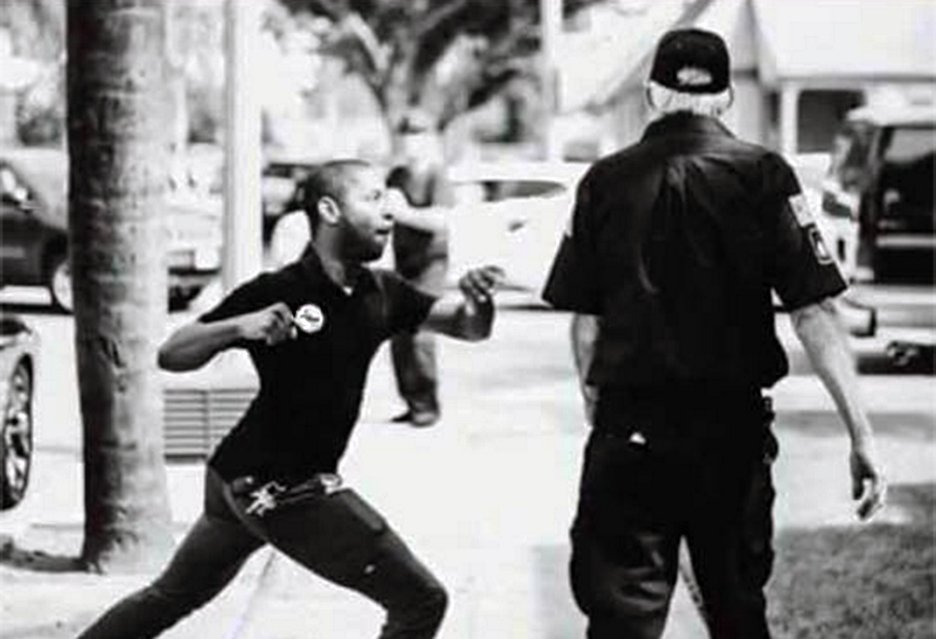
 ANAHEIM, CA, February 27—In a pitched battle with the Ku Klux Klan and their allies in the Anaheim Police Department, local anti-racists and the Progressive Labor Party suffered casualties but also served notice: No free speech for racists!
Leading a group of bold Black, Latin, and white anti-racists, PLP fought back against KKK scum who’d planned to hold a “White Lives Matter” rally. Emboldened by the openly racist filth spewed by the capitalist ruling class’s presidential candidates, KKK members felt they could intimidate Muslim and immigrant workers here. But when we heard about their planned rally, we determined to fight back.
Drawn by PLP signs that said “No Racism” and “Smash Racism with Multiracial Unity,” local anti-racists gathered around us. Party members and friends used a bullhorn to lead the group in anti-Klan chants. As we distributed CHALLENGE, comrades spoke about multiracial, working-class unity as the key to fighting racism and smashing capitalism. Others explained that the battle against the KKK was just one front in the fight against the kkkops and imperialist war. Other community members were invited to speak, including a mother whose son was murdered by kkkops.
No Honor Among Slime
While we were rallying, a black SUV pulled up. Half a dozen KKK racists, dressed in black uniforms with Confederate flags and iron cross patches, slimed out. When our large group confronted them, these racist thugs speared one anti-racist with an American flagpole. We cracked their car windshield and fought back against the vicious attack. Cowed by our militancy, three Klansmen drove off in their smashed car, leaving the other three gutter racists to fend for themselves. We beat them back, even as they continued to attack us with knifes. This sexist, racist gang was beaten by a multiracial group of women and men.
Throughout the attack, the kkkops did nothing to stop the Klansmen, who were allowed to walk away from the scene with bloody knives. We would not let them get away, and a few protesters confronted the fleeing cowards. This forced the kkkops to pretend to detain the Klansmen. But even when the cops finally took the criminals’ knives, they were laughing and joking with the Klan and protecting them in a cordoned-off area. While six Klan members and seven protesters were arrested, five of the Klan members were released within hours.
Sending Our Message
The aftermath? Some serious stab wounds, broken arms, ribs, and other injuries—some inflicted by Klansmen, some by kkkops. Plus three KKK thugs beaten and many more seriously intimidated. We sent a clear message: The working class will not allow our class brothers and sisters to be harrassed and attacked.
The police sent their own clear message as to whose side they are on. They defended the Klan, let most escape, and quickly released the few Klansmen they did arrest. The police are never there to defend the working class. They enforce the laws of the capitalist class, so it is no wonder they use and defend racism. Capitalism needs violent, racist intimidation to keep the working class divided and stop us from fighting back.
Anaheim has a long history of pro-Klan sentiment. Historically, many Klansmen have also been police officers or city officials. In the early 1920s, four of five City Council seats were held by Klansmen. “At the height of the group’s power in Orange County, nearly 300 Klansmen lived in Anaheim, patrolling city streets in robes and masks. A large KKK rally once attracted 20,000 people to the city” (Los Angeles Times, 2/29/16). Klan activity in Southern California is not ancient history. In 2003, an eight-foot cross was burned outside a Black resident’s home in Anaheim Hills. Within the past year, these cowards have left racist flyers on driveways in Whittier, Fullerton, and Santa Ana.
Our Proud History of Fightback
PLP has a strong understanding of the ties between the KKK and the police. We know the only way to stop the Klan is to fight back with organized violence. There is no such thing as a peaceful demonstration by a racist hate group. Even if they don’t throw the first punch, their racist speech directly leads to more attacks against Black, Latin, and immigrant workers.
For more than 40 years, Progressive Labor Party has organized to beat back these racist attacks. In 1975, in Boston, at a May Day march and summer project, PLP stopped racists from blocking and throwing stones at buses carrying Black students who were integrating white schools. The racists never showed their faces again. In 1978, in Chicago we led a multiracial march through so-called “Nazi territory,” broke into Nazi headquarters and closed it down. In 1999, in New York City, we infiltrated a KKK march and beat up its leader. They have not dared to march in New York City since.
These confrontations with the Klan and other racist groups are extremely important, but they are only the beginning of our larger fight. We must use these battles to build a mass movement for communist revolution. Only by smashing capitalism and replacing it with communism can we eliminate racism. A communist society will not tolerate free speech for racists.
Across the U.S., our local fightback has sparked conversations among workers of all kinds. To consolidate our political gains, we must hold rallies of solidarity and build anti-racist struggles. In New York City, students and workers are using fundraisers for the Anaheim fighters as a way to talk to friends, coworkers, family, and people on the street about anti-racism.
What we do counts for the international working class. The more we fight back, the more it encourages other workers to do the same. When workers witness heroic militancy, they respond with overwhelming support. No matter where you are in the world, you can spark anti-racist struggle and work to tear this racist system down. Join the fightback!
- Information
For Vincent and Tamir, Fight Capitalist State Terror
- Information
- 10 March 2016 633 hits
INDIANA—“Racism means we got to fight back!” This chant set the tone at the vigil and rally for the non-indictment of slain youth Tamir Rice and all victims of state violence.
In response to continuing racist, capitalist-created violence and government-sponsored terror, a communist-led Black Lives Matter group organized this fightback. Over 30 residents braved the below-freezing temperatures to stand in multiracial solidarity against police violence and the conditions that foster violence in our communities.
People lit candles and carried signs with the names and pictures of some of the countless victims of racist police terror across the country. Among the victims discussed was Vincent Smith Jr., a Black teenager in Gary, Indiana who was unarmed when police shot him in the head in 2006. Back then, PL’ers joined community protests to bring the cop to trial. After a sham trial, the murderer got away scot-free. Much like Tamir, Vincent was yet another Black child whose life was cut short by police terror with impunity. It’s a very old song that workers know by heart.
Planting Communist Ideas
PLP had put forth the political line that there will never be justice for working class people in a capitalist system that needs to exploit to survive. Comrades have been introducing CHALLENGE to members in Black Lives Matter and highlighting how KKKop murders, crimes, garbage school systems, etc. all have a common root: capitalism. We’ve used the pamphlet Smash Racism to show the history of how racism is used to oppress all people, while specifically strangling Black working class people, and how organizing as a party to fight racism and to end capitalism is the only way to win.
The people in our mass organization recognize the connection between capitalism and racist state violence. At the rally, people enthusiastically took CHALLENGE and initiated conversations about how the ruling class makes money from racism, poverty, and mass incarceration. Workers here in this mainly Black region are living the racist nightmare of poverty engineered by politicians and profiteers in a dead-end capitalist system. As we build in the local movement against police violence, protests like this one provide opportunities to bring the message of communism to the masses. It is also good training for bigger fightbacks!
QUEENS, NYC—At a film showing of Burn! a woman Emergency Medical Technician announced that TransCare had shut down and laid off nearly 2,000 EMTs, paramedics, dispatchers and others.
The workers received no warning and were told they were not getting paid for the last week they worked. To add insult to injury, many learned that the paychecks they received three weeks ago had bounced!
Lynn Tilton, owner of TransCare, will continue be a millionaire while capitalism burns workers’ livelihoods. The TransCare workers have no union and because they received no warning about the coming mass layoffs, were not prepared to take collective action. They began to scramble and do the little they could to protect themselves: file for unemployment benefits, file complaints with the Attorney General over the lack of notice, and contact lawyers about a suit against the company.
However, our TransCare comrade had another idea—organize workers to protest in front of the company’s office in lower Manhattan. So we decided to call a rally for two days later, write a flyer, post it on Facebook and contact as many TransCare workers as we knew.
Capitalism Burns Workers
Burn! depicts a revolution of slaves in the Caribbean during the 19th century. We realized that as the film Burn! perfectly illustrates wage slavery is a brutal system of exploitation, and like chattel slavery it only serves the interest of the capitalist class. We decided the rally would offer us many advantages in bringing our fight to the forefront but total eradication of wage slavery will only come to fruition under a communist system, moreover a communist system led by the PLP. This led to our talking about marching on May Day (Saturday, April 30)—the only true workers’ day where workers affirm their connection in the struggle for a world without racism, sexism and other forms of capitalist exploitation.
PLP fights with TransCare Workers
The first rally PLP organized drew only six workers and two supporters. Four days later, we had another rally, this time with a dozen workers and five supporters, including members of the CUNY faculty and staff union. Another rally is planned for next week.
Under capitalism, any company can shut down and throw their workers out onto the streets. So while we fight for back pay, we also need to explain to TransCare workers, and to CUNY students and professors, that we need to take state power.
Power will in the hands of working people women and men, who will carry out the task of using the wealth we create to provide everyone with the things we need: housing, health care, jobs that make use of our talents and interests, international cooperation of workers without wars and national borders, and the elimination of racism and sexism. March on May Day!